

Designed for processing wood pulp into high-quality paper products, modern A4 copy paper production equipment integrates pulp preparation, stock approach systems, paper forming, pressing, drying, calendaring, and rewinding technologies. These processes work together to produce paper with uniform thickness, good surface smoothness, suitable stiffness, and reliable printing performance.
A wooden pulp A4 copy paper making machine is an industrial paper production system that uses wood pulp as its primary raw material to manufacture printing and writing paper.
Depending on the production configuration, the equipment can process bleached hardwood pulp, softwood pulp, or a properly formulated combination of different pulp fibers.
Hardwood pulp generally contributes to paper formation and surface characteristics, while softwood pulp can improve strength and durability. By adjusting the pulp ratio, refining conditions, and chemical additives, manufacturers can develop paper grades with different performance requirements.
The production line can be configured for A4 copy paper, printing paper, notebook paper, writing paper, and other cultural paper products.
A complete wood pulp paper production line typically includes the following stages:
Wood pulp is mixed with water in pulping equipment to create a uniform pulp suspension. Refining and screening processes help improve fiber distribution and remove unwanted impurities.
The pulp is adjusted according to the required paper grade. Starch, fillers, sizing agents, and other suitable additives may be introduced to achieve the desired strength, brightness, opacity, and printing characteristics.
The prepared pulp suspension is delivered to the paper machine headbox and distributed evenly onto the forming section. Water is removed through drainage, allowing fibers to form a continuous wet paper web.
The wet paper passes through the press section, where mechanical pressure removes additional water and improves sheet consolidation.
The paper web enters the drying section, where steam-heated drying cylinders gradually reduce moisture content to the required level.
Calendering helps improve paper smoothness, thickness uniformity, and surface quality, making the finished paper more suitable for printing and writing applications.
The finished paper is wound into jumbo rolls before being transferred to a sheeting and cutting system. The jumbo rolls are converted into standard A4 sheets and packaged for distribution.
Modern writing and cultural paper production equipment offers several advantages for paper manufacturers:
Consistent Paper Quality: Advanced forming and pressing systems help maintain uniform paper thickness, basis weight, and sheet formation.
Flexible Production Capacity: Production lines can be designed according to different machine widths, operating speeds, and target output requirements.
Improved Surface Performance: Calendering and finishing systems help achieve smooth surfaces suitable for office printing and photocopying.
Efficient Production Processes: Integrated pulp preparation and paper processing equipment supports continuous industrial production.
Flexible Raw Material Formulation: Different wood pulp combinations can be used to meet specific paper strength, brightness, and printing requirements.
Automation Options: PLC control systems, variable frequency drives, and online monitoring can improve operating stability and production management.
A wood pulp paper making machine can be configured to manufacture various paper grades, including:
A4 copy paper
Office printing paper
Offset printing paper
Writing and notebook paper
Educational and school paper
General cultural paper
Commercial printing paper
These products are widely used in offices, schools, publishing companies, printing facilities, and commercial stationery markets.
Before investing in a paper production line, manufacturers should evaluate several important factors:
Production Capacity: Determine the required daily or annual output based on market demand.
Paper Basis Weight: Common office copy paper grades include 70gsm, 75gsm, and 80gsm.
Machine Width and Speed: Select appropriate technical specifications according to the intended production capacity.
Raw Material Availability: Evaluate the availability and cost of hardwood pulp, softwood pulp, and other suitable fiber materials.
Energy Consumption: Consider electricity, steam, water consumption, and heat recovery opportunities.
Finished Product Requirements: Define paper brightness, opacity, smoothness, stiffness, and printing performance.
Factory Conditions: Ensure that the workshop, water supply, power system, steam supply, and wastewater treatment facilities meet production requirements.
A properly configured production line can help manufacturers balance product quality, operational costs, and long-term production efficiency.
The paper manufacturing industry is moving toward more efficient, automated, and resource-conscious production methods.
New-generation A4 copy paper manufacturing equipment increasingly incorporates intelligent control systems, optimized drying technologies, improved fiber preparation, and energy management solutions.
Manufacturers are also paying greater attention to water recycling, steam utilization, waste reduction, and production process optimization.
For paper producers targeting the office paper and educational paper markets, investing in suitable production equipment is an important step toward improving manufacturing capabilities and maintaining product competitiveness.
The Wooden Pulp A4 Copy Paper Making Machine provides an integrated manufacturing solution for producing high-quality copy paper, printing paper, writing paper, and other cultural paper products.
From pulp preparation and paper forming to drying, finishing, rewinding, and A4 sheet cutting, every production stage contributes to the final paper quality.
By selecting appropriate equipment specifications and optimizing the production process, paper manufacturers can establish efficient and reliable paper production facilities to serve the growing demand for office and printing paper.
Contact a professional paper machinery manufacturer to discuss machine configurations, production capacity, raw material requirements, and customized technical solutions.
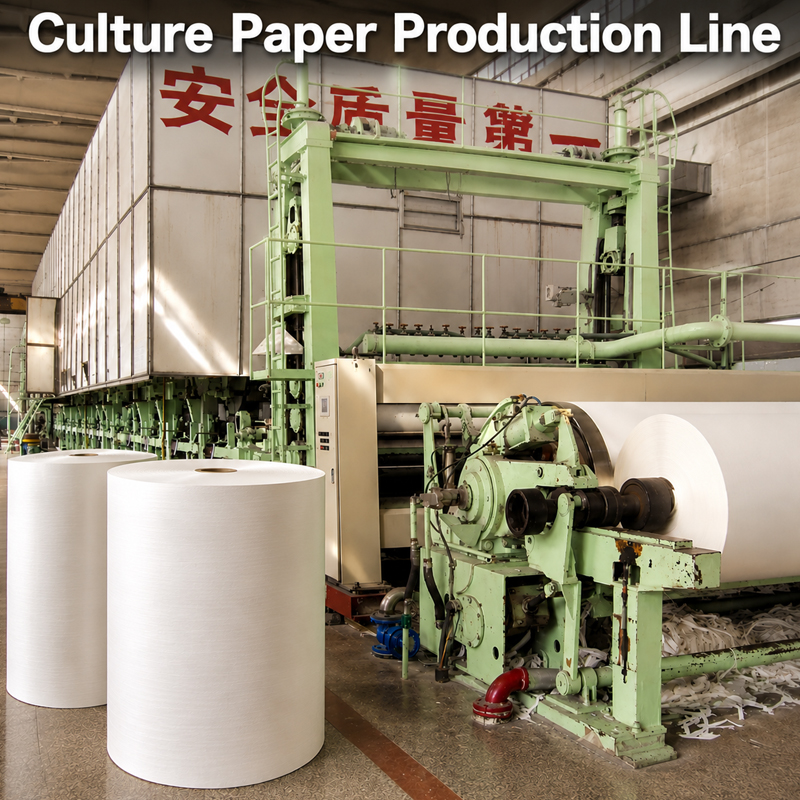
Wood pulp is the primary raw material. Manufacturers commonly use bleached hardwood pulp, softwood pulp, or a combination of both to achieve the required paper strength, brightness, and surface quality.
It can manufacture A4 copy paper, office printing paper, writing paper, notebook paper, offset printing paper, and various other cultural paper products, depending on the machine configuration.
Common A4 copy paper specifications include 70gsm, 75gsm, and 80gsm. Production equipment can be configured for different basis weights according to customer requirements.
A complete production line generally includes pulp preparation equipment, screening systems, refining equipment, a headbox, forming section, press section, drying cylinders, calendering equipment, a rewinder, and an A4 sheet cutting and packaging system.
Yes. With suitable adjustments to pulp formulation, chemical additives, machine operating parameters, and finishing processes, a properly designed production line can manufacture different grades of writing and cultural paper.
Paper quality can be improved by optimizing fiber refining, pulp consistency, chemical formulation, sheet formation, pressing pressure, drying conditions, and calendering parameters.
Investment costs depend on production capacity, machine width, operating speed, automation level, raw material preparation systems, finishing equipment, and auxiliary facilities.
Yes. Professional paper machinery manufacturers can design production lines according to customer requirements, including target output, paper GSM, raw materials, factory conditions, and finished paper specifications.

