
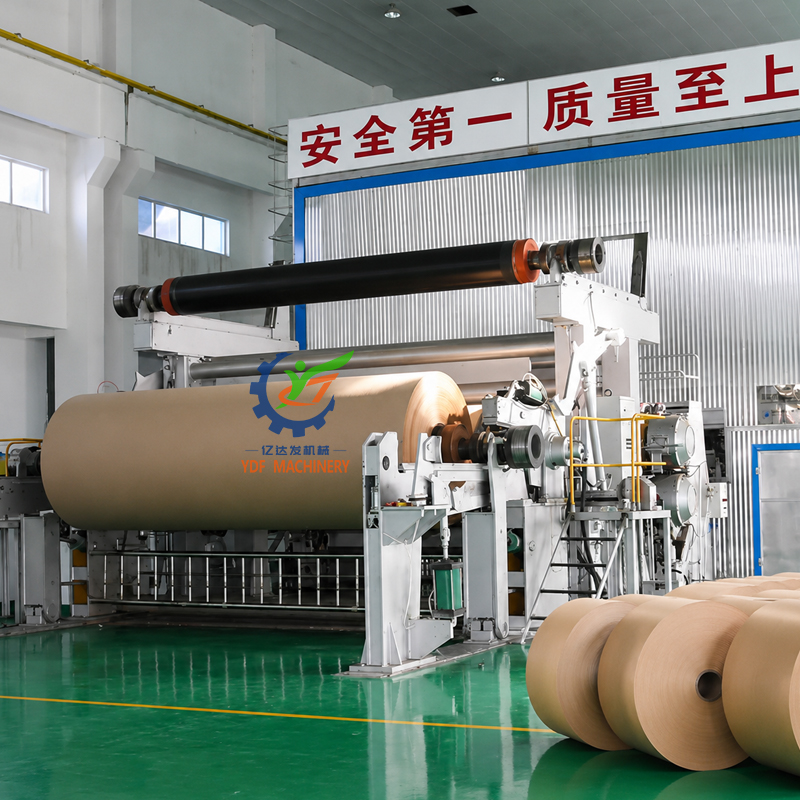
As global demand for sustainable packaging materials continues to grow, kraft paper manufacturers are increasingly focusing on resource efficiency, recycled fiber utilization, and reliable production technology. A Waste Paper Recycling System Kraft Paper Making Machine provides an integrated solution for converting recovered paper into useful kraft paper products for packaging, corrugated board, industrial wrapping, and other applications.
By combining waste paper processing technology with an efficient kraft paper production line, paper manufacturers can make better use of recyclable raw materials while supporting more sustainable manufacturing practices.
A waste paper recycling system kraft paper making machine is an industrial paper production solution designed to process suitable recovered paper into new paper products. The system typically integrates waste paper pulping, screening, cleaning, stock preparation, paper forming, pressing, drying, and reeling equipment.
Depending on the required paper grade, raw material composition, production capacity, and finished paper specifications, the production line can be configured to manufacture recycled kraft paper, packaging paper, linerboard, and corrugated paper base stock.
For paper mills seeking to improve raw material utilization, an appropriately designed recycling and papermaking system can help establish a more efficient and consistent production process.
A complete waste paper recycling kraft paper production line generally includes the following sections:
Waste Paper Pulping System
Recovered paper is mixed with water and processed in a pulper to separate fibers. The pulping configuration depends on the type and quality of the incoming waste paper.
Screening and Cleaning System
Screening and cleaning equipment removes contaminants such as plastic pieces, staples, sand, and other unwanted materials. Effective contaminant removal helps protect downstream equipment and improve stock quality.
Pulp Preparation System
The recovered fiber stock is adjusted according to the target paper grade. Depending on the production requirements, this section may include refining, mixing, consistency control, and chemical addition systems.
Kraft Paper Making Machine
The prepared stock is distributed onto the forming section to create a continuous wet paper web. The web then passes through pressing and drying sections to achieve the required dryness, strength, and paper properties.
Reeling and Finishing Equipment
The finished paper is wound into jumbo rolls for subsequent slitting, rewinding, converting, or delivery to packaging manufacturers.
The equipment configuration should be selected according to the desired basis weight, machine width, production speed, fiber characteristics, and final product application.
Better Utilization of Recovered Paper
Recycling suitable waste paper helps recover valuable cellulose fibers and reduces dependence on virgin fiber for applications where recycled fiber is appropriate.
Flexible Product Applications
Depending on raw material quality and machine configuration, the production line can support various packaging paper grades, including recycled kraft paper, linerboard, and corrugated paper base stock.
Integrated Process Control
Coordinated operation of pulping, stock preparation, forming, pressing, and drying equipment helps maintain stable production conditions and consistent paper quality.
Potential for Improved Resource Efficiency
Optimized water circulation, appropriate energy management, and effective contaminant removal can improve overall resource utilization. Actual savings depend on the plant design, raw materials, operating practices, and local conditions.
Customized Production Solutions
Paper machine width, design speed, target grammage, automation level, and auxiliary equipment can be selected according to individual mill requirements and investment plans.
Kraft paper produced from suitable recovered fibers can serve a wide range of industrial and commercial applications, including:
Corrugated box manufacturing and linerboard production
Shipping cartons and protective packaging
Industrial wrapping paper
Paper bags and selected packaging products
Recycled packaging paper for manufacturing and logistics
The suitability of recycled fibers depends on the required strength, cleanliness, appearance, and performance standards of the final product.
Before investing in a kraft paper production line, manufacturers should evaluate several important factors.
First, identify the available waste paper grades and their consistency. Different recovered paper sources can have significantly different fiber properties and contaminant levels.
Second, determine the target paper specifications, including basis weight, machine width, production capacity, and finished roll requirements.
Third, assess the complete production process rather than selecting the paper machine alone. Pulping capacity, screening efficiency, drying requirements, water treatment, electrical systems, and auxiliary equipment all influence overall plant performance.
Finally, consider factory space, utility availability, automation requirements, maintenance access, and future production expansion.
Working with an experienced paper machinery supplier can help manufacturers develop a production line that better matches their raw materials, product positioning, and operating budget.
A Waste Paper Recycling System Kraft Paper Making Machine offers paper manufacturers a practical approach to producing recycled packaging paper from suitable recovered fibers. By integrating efficient stock preparation, contaminant removal, paper forming, drying, and finishing processes, manufacturers can develop a production system tailored to their specific product requirements.
As demand for recyclable packaging materials continues to develop, investment in properly configured waste paper recycling and kraft paper manufacturing equipment can support improved resource utilization, dependable production, and long-term manufacturing competitiveness.
For paper mills planning a new kraft paper production line or upgrading existing equipment, evaluating raw material quality, finished paper specifications, energy consumption, and overall system integration is an important first step toward a suitable investment.
Q1: What types of paper can be produced using a waste paper recycling system kraft paper making machine?
Depending on raw material quality and machine configuration, the system can produce recycled kraft paper, packaging paper, linerboard, and corrugated paper base stock.
Q2: What raw materials are suitable for recycled kraft paper production?
Suitable raw materials may include sorted corrugated containers, recovered kraft paper, and other recyclable paper grades. The final selection depends on fiber quality, contamination levels, and finished paper specifications.
Q3: What equipment is included in a complete waste paper recycling production line?
A typical line includes a pulping system, screening and cleaning equipment, stock preparation equipment, a kraft paper making machine, pressing and drying sections, a reel-up system, and the necessary auxiliary equipment.
Q4: Can the production line be customized?
Yes. Depending on the supplier's capabilities, the production line can be configured according to machine width, target grammage, design speed, production capacity, raw materials, automation level, and finished product requirements.
Q5: Does using recycled paper reduce production costs?
Recovered paper may offer raw material cost advantages in some markets. However, total production costs also depend on fiber prices, raw material quality, transportation, energy, water treatment, chemicals, labor, and equipment efficiency. A detailed feasibility assessment is recommended.
Q6: How can manufacturers improve the efficiency of a kraft paper production line?
Efficiency can be improved through appropriate pulping and screening configurations, stable stock preparation, optimized drying conditions, preventive maintenance, effective process control, and suitable water and energy management.
Q7: What information is needed to select a suitable kraft paper making machine?
Important details include the intended paper grade, target basis weight, required paper width, production capacity, available raw materials, local utility conditions, factory space, and investment budget.
Q8: Is a waste paper recycling system suitable for a new paper mill?
It can be suitable for a new paper mill when recovered fiber is available and the planned product grades are compatible with recycled raw materials. A feasibility study should assess raw material supply, market demand, utilities, environmental requirements, and expected operating costs before investment.

