
Subtitle: Advanced Automation, Energy-Saving Technology, and Sustainable Production Solutions Are Reshaping the Tissue Paper Industry
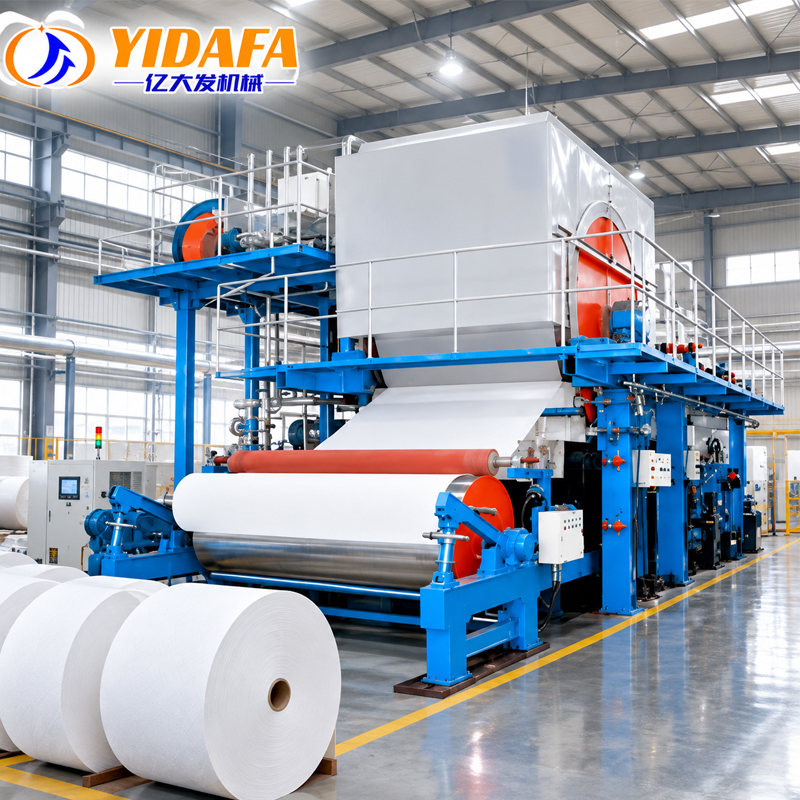
As consumers increasingly demand higher-quality daily necessities and China's dual-carbon strategy continues to advance, the tissue paper industry is entering a critical period of transformation from traditional manufacturing to green and intelligent production.
Recently, a new generation of toilet tissue paper making machines featuring energy efficiency, intelligent control, and environmentally responsible production technologies has attracted growing attention in the market. These innovations represent significant progress in papermaking equipment technology and provide new opportunities for tissue manufacturers seeking to improve product quality, reduce operating costs, and achieve sustainable development.
For paper mills planning new production facilities or upgrading existing lines, modern tissue paper manufacturing equipment offers an effective way to enhance production efficiency while responding to evolving market requirements.
Modern toilet tissue paper making machines are no longer simple combinations of mechanical components. Instead, they integrate automation, digital monitoring, and advanced process control into a coordinated production system.
The crescent former tissue paper machine is widely used in modern tissue manufacturing because of its efficient sheet formation, water removal, and high-speed production capabilities.
Its key components include the forming section, Yankee dryer, and hot air hood. Working together, these systems support efficient paper drying and creping while helping manufacturers achieve the desired softness, bulk, and strength of the finished tissue paper.
By optimizing airflow distribution and heat transfer efficiency, advanced drying systems can improve thermal performance and support consistent product quality. These improvements are particularly important for manufacturers producing toilet rolls, facial tissue, napkins, and other daily-use tissue products.
For premium tissue applications, optimized forming technology can also help preserve the bulk and softness of the fiber structure. Depending on the pulp furnish and production process, manufacturers may reduce their reliance on certain chemical additives while maintaining the required product characteristics.
The integration of Distributed Control Systems (DCS) and other automation technologies is transforming tissue paper production.
A modern automated tissue paper production line can monitor and regulate critical operating parameters throughout the papermaking process, including machine speed, temperature, airflow, and other process variables.
Through a centralized control system, operators can monitor production conditions in real time and make timely adjustments when necessary. This improves process consistency, simplifies daily operation, and helps manufacturers maintain stable product quality.
Additional automation features may include:
Automatic reel change systems to improve operating efficiency.
Web-break detection systems to identify production interruptions quickly.
Real-time process monitoring and alarm management.
Equipment fault recording and production data analysis.
Integrated control of forming, drying, and winding processes.
These functions can help reduce unplanned downtime, improve equipment utilization, and support continuous production. For manufacturers operating multiple shifts, intelligent control offers practical advantages in labor management, process stability, and production planning.
Energy efficiency and environmental performance have become important considerations when selecting a toilet tissue paper making machine. Modern equipment manufacturers are therefore focusing on heat recovery, improved dewatering, and more efficient use of water and raw materials.
The drying section is one of the major energy-consuming stages in tissue paper manufacturing. Improving its thermal efficiency can help reduce overall production costs.
Advanced tissue paper machines can be equipped with heat recovery systems that capture usable energy from exhaust air and redirect it to suitable preheating applications. For example, recovered heat may be used to preheat incoming air, depending on the system design and operating conditions.
Combined with optimized Yankee dryer and hot air hood performance, these technologies can improve heat utilization and reduce the amount of additional energy required during production.
The actual energy savings depend on machine configuration, production speed, tissue basis weight, pulp properties, fuel source, and operating practices. Therefore, manufacturers should evaluate energy consumption using technical specifications and operating data for the proposed production line.
Efficient water removal in the forming section can reduce the moisture load entering the drying section. This helps lower the energy required for subsequent drying and may improve overall production efficiency.
Modern forming technologies are designed to balance drainage performance, fiber retention, sheet formation, and product quality. When properly configured, these systems can help tissue manufacturers achieve stable production while making more efficient use of water and fiber resources.
For paper mills planning equipment upgrades, evaluating the entire production process—from stock preparation and forming to drying and winding—is essential to identifying meaningful opportunities for energy savings.
Some tissue manufacturers are also exploring production solutions that incorporate recycled fiber. With suitable wastepaper sorting, pulping, screening, cleaning, and deinking technologies, recovered paper can be processed into usable fiber for selected paper grades.
Recycled fiber applications depend on the cleanliness, strength, softness, and hygiene requirements of the final product. Not every recycled fiber furnish is suitable for every tissue application, so raw material selection and process design must be carefully evaluated.
When appropriate, recycled fiber systems can help reduce dependence on virgin pulp and improve resource utilization. Efficient water management, fiber recovery, and wastewater treatment can further support more sustainable tissue paper manufacturing.
As the tissue market becomes more diverse, papermaking equipment suppliers are increasingly providing complete production solutions rather than individual machines alone.
Whether a customer is establishing a new tissue paper mill or modernizing an existing factory, a customized solution can address production capacity, raw material availability, finished product specifications, energy efficiency, and available plant space.
A complete tissue paper production line may include stock preparation, approach flow systems, a tissue paper machine, drying equipment, reel handling, and auxiliary systems.
Depending on the customer's business model, the project may also incorporate downstream converting equipment for producing finished toilet rolls, facial tissue, or folded tissue products.
Professional project planning typically covers:
Factory layout and production capacity assessment.
Raw material selection and stock preparation design.
Equipment configuration and process integration.
Installation, commissioning, and operator training.
Maintenance planning and technical support.
Production efficiency and energy consumption evaluation.
A well-designed production line helps manufacturers coordinate individual machines, optimize workflow, and plan future capacity expansion.
For established paper mills, replacing an entire production line may not always be necessary. Targeted upgrades can improve the performance of existing equipment while allowing production to continue where project conditions permit.
Potential upgrade options include control system modernization, improved drive systems, energy-efficient auxiliary equipment, enhanced process monitoring, and selected improvements to forming or drying systems.
A phased modernization plan can help manufacturers manage investment costs and minimize disruption. However, the feasibility of maintaining normal production during installation depends on the scope of work, equipment interfaces, and factory operating conditions.
By assessing the existing machine and identifying its main performance limitations, manufacturers can prioritize upgrades with practical benefits for productivity, product quality, and energy management.
The development of high-efficiency tissue paper machinery reflects broader changes in the global paper industry. Manufacturers must balance product quality, production costs, environmental responsibilities, and market competitiveness.
Advanced toilet tissue paper making machines can offer several potential advantages:
Improved production efficiency: Integrated process control and automation can help stabilize operations and reduce avoidable interruptions.
Consistent product quality: Optimized forming, drying, and creping processes support the production of tissue paper with the desired softness, bulk, and strength.
Better energy management: Heat recovery and improved dewatering can reduce unnecessary energy consumption when properly designed and operated.
Flexible production planning: Suitable machine configurations can accommodate different tissue grades and production requirements.
More effective resource utilization: Appropriate pulp selection, fiber recovery, and water management can help reduce material losses and environmental impact.
The benefits achieved by each mill will depend on the selected technology, equipment configuration, raw materials, maintenance practices, and operating conditions. Manufacturers should compare complete technical proposals rather than relying on machine speed or rated capacity alone.
As automation, energy management, and sustainable manufacturing continue to develop, the tissue paper industry is expected to place greater emphasis on integrated production systems and data-driven operation.
Equipment manufacturers are responding by improving mechanical precision, control system integration, energy utilization, and engineering services. Reliable spare parts supply, installation support, operator training, and long-term maintenance are also important factors in equipment selection.
For tissue paper producers, investing in the right manufacturing technology can support long-term operational improvements and help meet changing customer expectations.
Selecting a suitable toilet tissue paper making machine requires a comprehensive assessment of production targets, pulp sources, finished product requirements, factory conditions, and investment plans. With appropriate equipment configuration and process optimization, manufacturers can build more efficient, flexible, and environmentally responsible tissue paper production facilities.
A toilet tissue paper making machine is industrial equipment used to manufacture tissue paper from suitable pulp materials. A typical production system includes stock preparation, sheet forming, drying, creping, and jumbo roll winding. Additional converting equipment can transform jumbo rolls into finished toilet paper products.
Depending on product requirements and local regulations, tissue paper may be produced using virgin wood pulp, bamboo pulp, selected recycled fibers, or a suitable combination of fiber sources. The choice affects softness, strength, cleanliness, cost, and the performance of the production process.
Energy consumption can be reduced through efficient dewatering, optimized drying systems, heat recovery, appropriate drive configuration, and improved process control. Actual savings depend on the machine design, raw materials, product specifications, and operating conditions.
A Yankee dryer is a large heated cylinder used to dry the paper web in many tissue paper machines. Together with a creping system and, where applicable, a hot air hood, it helps produce tissue paper with the desired dryness, bulk, softness, and surface characteristics.
Yes. Depending on the condition and design of the existing equipment, possible upgrades include automation systems, drives, process monitoring, heat recovery, and selected forming or drying components. A technical assessment is recommended before deciding on the upgrade scope.
Consider production capacity, finished paper width, basis weight, pulp type, target product quality, energy consumption, factory space, automation level, and total investment. It is also important to evaluate installation support, spare parts availability, maintenance requirements, and the supplier's technical service capabilities.
High-efficiency toilet tissue paper making machines are helping the tissue industry move toward more intelligent, resource-efficient, and sustainable manufacturing. Through advanced forming technology, automated process control, improved drying systems, and customized production line design, manufacturers can pursue higher productivity and more consistent product quality while managing operating costs.
For businesses planning a new tissue paper mill or upgrading existing equipment, selecting a production solution that matches actual manufacturing needs is a key step toward long-term competitiveness in the evolving tissue paper market.

